High-Flow Silt Fence: Why Siltsaver WBSF Outperforms Standard Silt Fence on Heavy Stormwater Sites
If you've managed a construction site through a hard rain, you already know where silt fences tend to fail first: the low points. Water pools against the fabric, pressure builds, and within a few storms, the fence either gets undermined at the base or overtopped at the crest, sending the sediment it was supposed to stop straight into a storm drain or stream. Additionally, sites with steep slopes, large drainage areas, or concentrated flow paths can also be a headache to manage with a standard single-sieve silt fence.
We’re always keeping an eye out for updated product technology that solves problems for jobsites, and Siltsaver's Woven Belted Silt Fence (WBSF) is top of mind during summer thunderstorm season.
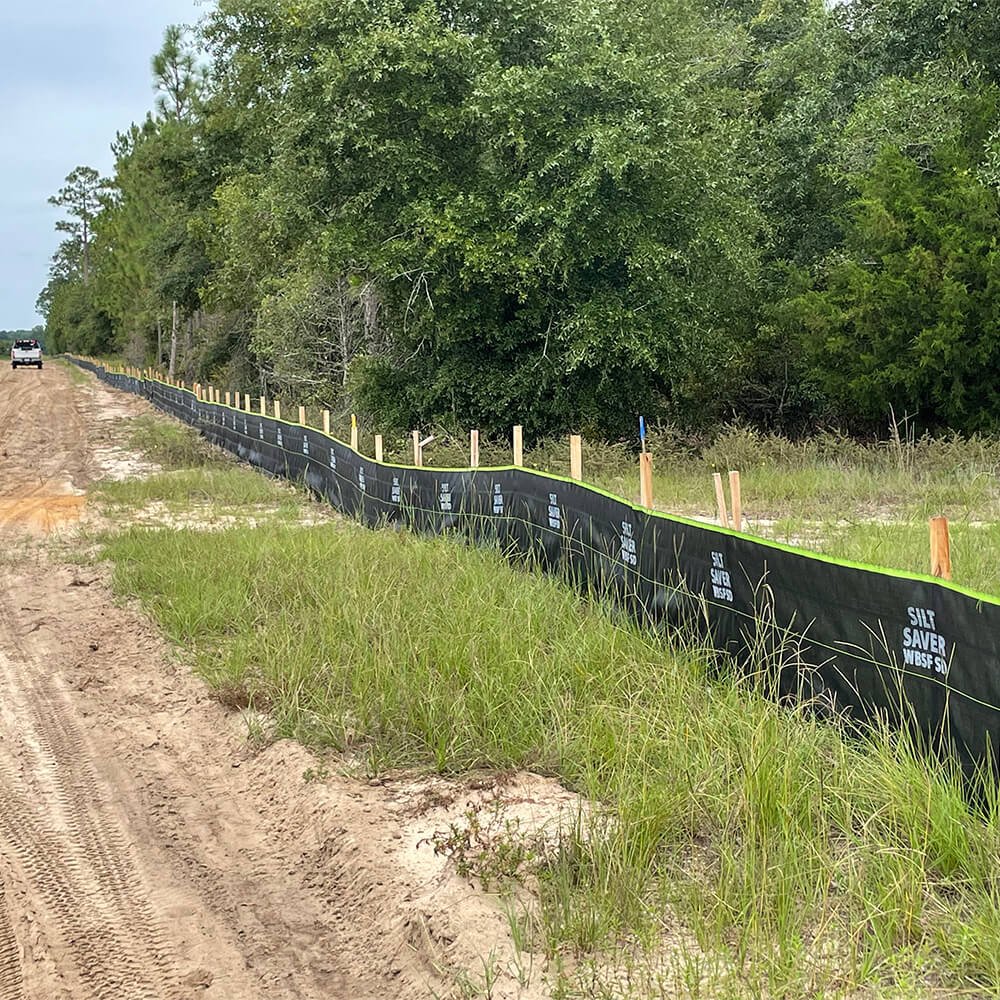
Why Standard Silt Fence Struggles in High-Flow Areas
Conventional silt fence uses one fabric sieve size from top to bottom, which works fine in low-volume sheet flow, but in areas with heavier or more concentrated stormwater, it puts the fabric in an impossible position. It has to be tight enough to filter sediment, yet open enough to release water quickly enough to avoid building hydrostatic pressure. Single-sieve fabric struggles to do both during high-flow conditions, and the result is the failure pattern most contractors have seen firsthand:
stake deflection
blowouts
constant maintenance
re-installation
What Makes Siltsaver WBSF a “High-Flow” Silt Fence
Siltsaver's WBSF line addresses this by reinforcing and segmenting the fabric itself rather than relying on wire backing for strength.
Internal woven belts for structural strength.
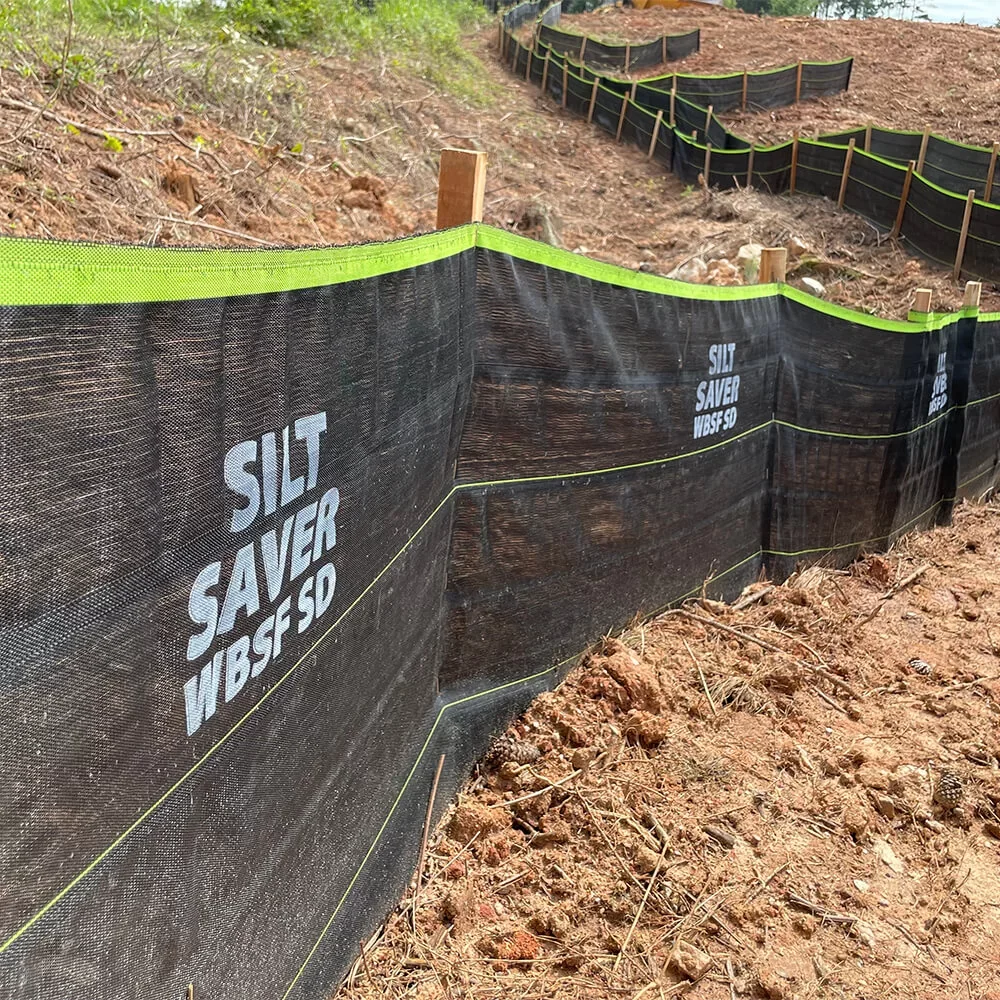
Instead of a wire mesh backer, WBSF has several high-tensile-strength belts (rated well above 350 lbs.) woven directly into the geotextile. These belts act as built-in attachment points and distribute the load of ponded water and accumulated sediment across the whole fence line, rather than concentrating stress at the stakes.Two-stage fabric for controlled release.
The WBSF 2-Stage version takes this further by using two different fabric sieve sizes in a single 36-inch fence:The lower 12 inches (Stage 1) uses a tighter, high-efficiency sieve built for sediment retention and filtration close to the ground.
The upper 12 inches (Stage 2) uses a more open sieve that allows a much higher rate of clear-water flow through.
In practice, this means the fence retains sediment in the lower filtration zone while allowing higher volumes of relatively cleaner stormwater to pass through the upper stage. That controlled release helps reduce water pooling and hydrostatic pressure, which can contribute to overtopping and other common silt fence failure modes during high-flow events.
No wire backing required.
Because the belts carry the structural load, WBSF can be installed without wire mesh, which simplifies installation and removal on projects where wire-backed fence has traditionally been specified for high-flow areas.
Where High-Flow Silt Fence Makes Sense on a Project
High-flow silt fence isn't necessarily a perimeter-wide replacement for standard fence: it's a targeted solution for the parts of a site where conventional fence consistently underperforms, including:
Toe-of-slope areas below long or steep grades
Swales, low points, and natural drainage paths where flow concentrates
Areas downstream of large disturbed drainage areas
DOT and large commercial sites where repeat maintenance and rework are a real cost driver
Sites with a documented history of silt fence failure in the same locations
Many engineers specify high-flow or reinforced silt fence for these zones rather than specifying one fence type for an entire perimeter, since it lets the project budget go toward reinforcement where it's actually needed.
Standard silt fence remains an effective BMP for many perimeter applications where runoff occurs primarily as sheet flow and contributing drainage areas are relatively small.
Compliance and Maintenance Benefits
While repeated silt fence failures cost materials and labor for re-installation, they can also put a site at odds with its erosion and sediment control plan or VPDES/stormwater permit requirements. A fence system that's better suited to the site's flow conditions may require fewer emergency repairs after heavy storms and can help keep sediment controls working as intended between routine inspections, making life a little easier for crews, inspectors, and project owners alike.
Interested in learning more?
Environmental Construction Solutions stocks and distributes Siltsaver WBSF and other high-performance silt fence options for projects across Virginia, Maryland, and the Mid-Atlantic. If you've got a site with a history of overtopping, undermining, or repeat silt fence maintenance, our team can help you figure out where a reinforced, high-flow fence makes sense and where standard fence still gets the job done. Reach out to us here if you’d like to talk through your project.